
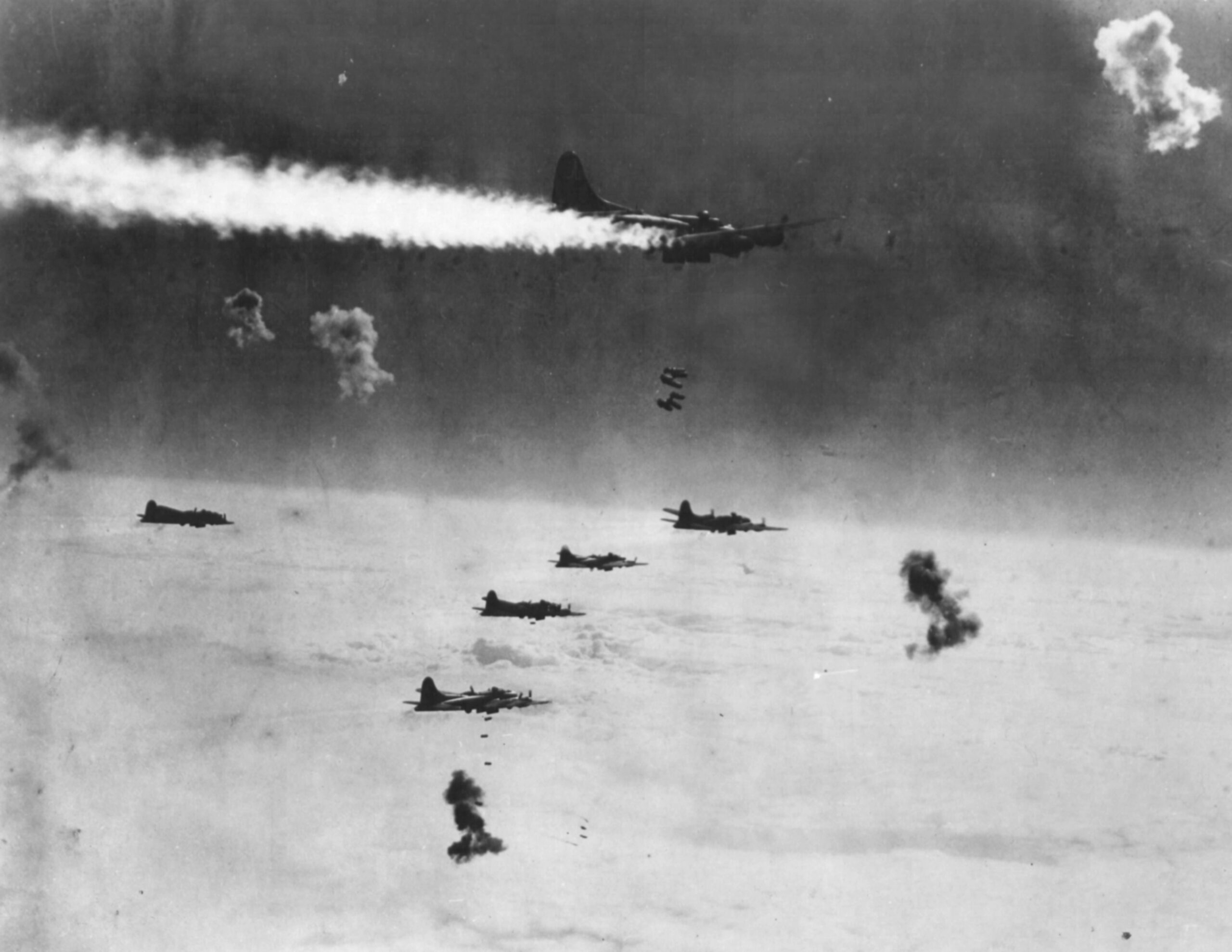
March 6, 1944, marked a historic milestone in the annals of World War II as U.S. heavy bombers staged the first full-scale American raid on Berlin, the heart of Nazi Germany. This daring and audacious operation represented a pivotal moment in the air war over Europe, signaling the United States’ unwavering commitment to the strategic bombing campaign and its resolve to bring the Third Reich to its knees.
Context and Planning
The decision to target Berlin, Adolf Hitler’s seat of power and the symbolic center of Nazi ideology, was not taken lightly. For years, Allied planners had debated the feasibility and wisdom of launching a direct assault on the German capital, weighed down by concerns over the formidable defenses arrayed around the city and the risks inherent in such a high-profile operation.
Preparation and Prelude
By early 1944, the Allies had achieved significant air superiority over the skies of Europe, thanks in large part to the relentless efforts of American and British bomber crews. Operation Argument, later known as the “Big Week,” served as the prelude to the historic raid on Berlin. From February 20th to February 25th, 1944, American and British bombers embarked on a relentless series of daylight raids against German aircraft factories, airfields, and ball-bearing plants, aiming to cripple the Luftwaffe’s ability to contest Allied control of the skies.
The Historic Raid
The success of Operation Argument paved the way for the next phase of the strategic bombing campaign: the bold and audacious assault on Berlin itself. On the morning of March 6, 1944, hundreds of American heavy bombers, including B-17 Flying Fortresses and B-24 Liberators, took to the skies over England, their sights set on the distant spires of the German capital.
Challenges and Resistance
Escorted by squadrons of P-47 Thunderbolt and P-51 Mustang fighters, the American bombers formed up into tight formations, bracing themselves for the long and perilous journey ahead. As they crossed the North Sea and penetrated deep into enemy territory, they encountered fierce resistance from German fighter planes and anti-aircraft guns, testing the resolve and courage of the bomber crews.
Impact and Aftermath
Despite the formidable challenges posed by enemy defenses, the American bombers pressed on, their determination undimmed by the ferocity of the Luftwaffe’s counterattacks. As they approached Berlin, they encountered a scene of utter devastation: the city’s streets were choked with smoke and rubble, its skyline obscured by billowing clouds of fire and smoke.
Legacy and Tribute
The impact of the first American raid on Berlin was felt far beyond the confines of the German capital. It sent shockwaves through the Nazi leadership, shattering their illusions of invincibility and exposing the vulnerability of the Reich to sustained aerial bombardment. In the weeks and months that followed, American bombers would return to Berlin time and again, their raids growing in scale and intensity as the Allies tightened the noose around the Third Reich.
As we reflect on the events of March 6, 1944, let us remember the courage and sacrifice of the American bomber crews who risked everything to strike a blow against tyranny and oppression. Their valor and determination paved the way for the liberation of Europe and the eventual triumph of freedom over tyranny. In honoring their memory, we pay tribute to the indomitable spirit of all those who fought and died in the struggle for peace and justice during World War II.
Rob
Nice article!
Kim
I’m watching Masters of the Air and it helps to make this incredibly difficult yet necessary mission so much more real. Our men were so brave and they all should be remembered and thanked.
Jack
The 3,000 mile round-trip B-29 bombing runs from the Marianas to Japan & back was no cakewalk either!!!
Robert Rotherham
The men of World War 2 was the greatest generation. God bless them all !!!!!