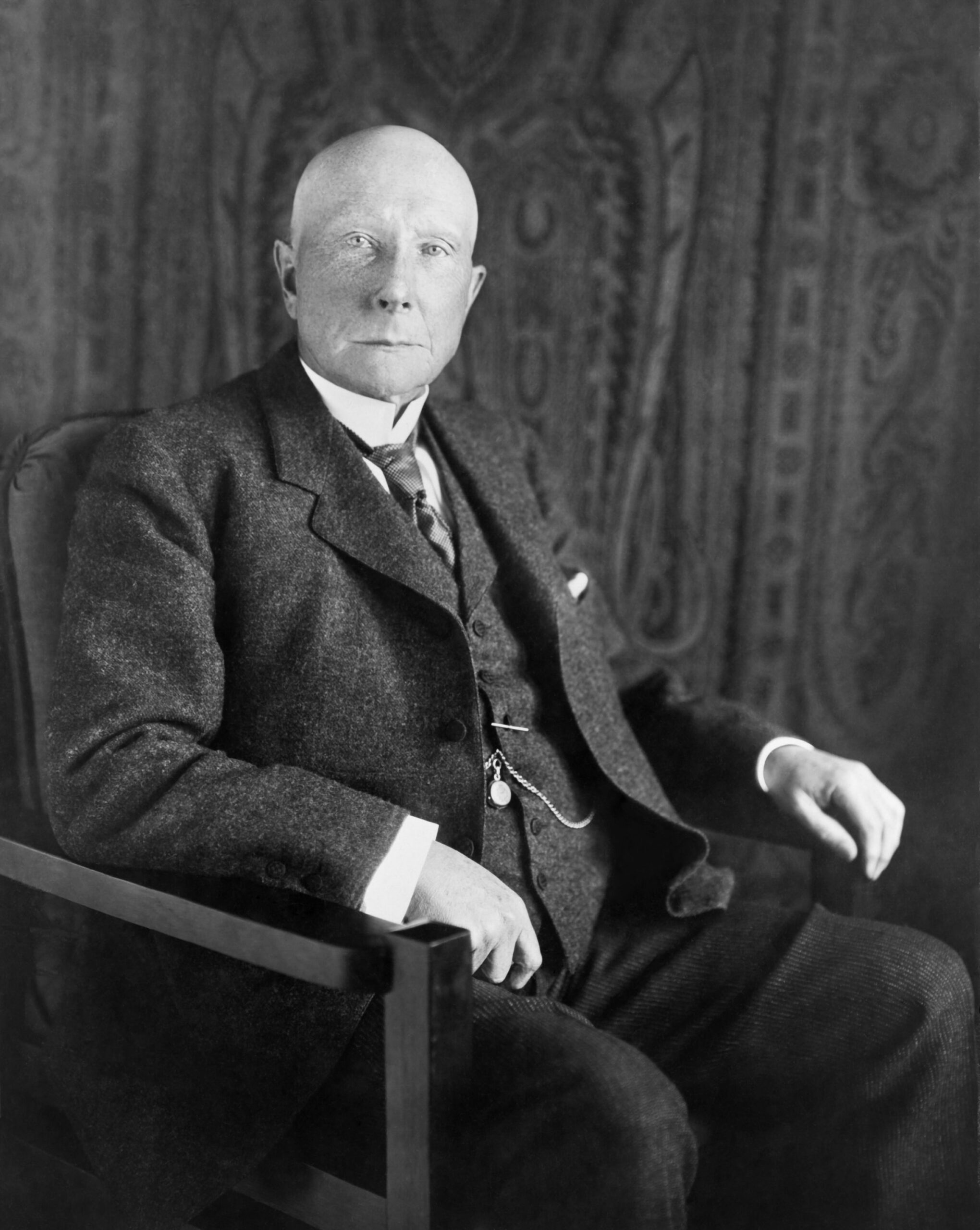
On July 8, 1839, a boy was born in a small farmhouse in Richford, New York, whose name would become synonymous with wealth itself. John Davison Rockefeller grew up without privilege, but by the end of his life, he controlled roughly 90% of America’s oil refining capacity and became the richest person in the country’s history. His story is one of ambition, ruthless efficiency, and a legacy that still shapes debates about business and philanthropy today.
An unlikely beginning
Rockefeller’s early life offered few hints of the fortune to come. His father, William Rockefeller, worked as a traveling salesman known for questionable business dealings, while his mother, Eliza, raised the family with strict discipline and religious devotion. The family moved frequently, and young Rockefeller took his first bookkeeping job at age 16, earning 50 cents a day. He later described that first job as the foundation for everything that followed.
- Rockefeller was the second of six children.
- He kept a meticulous personal ledger from a young age, tracking every cent earned and spent.
- He left formal schooling before college to begin working full time.
Building an oil empire
In 1863, Rockefeller entered the oil refining business in Cleveland, Ohio, just as the industry was taking shape following the 1859 discovery of oil in Pennsylvania. He founded Standard Oil in 1870 and pursued an aggressive strategy of buying out competitors, controlling railroads and pipelines, and standardizing production to cut costs. Within a decade, Standard Oil dominated the American oil industry so completely that it became a symbol of monopoly power.
Historians describe Rockefeller’s methods as both brilliant and controversial. He negotiated secret railroad rebates that undercut competitors and absorbed rival refineries at a rapid pace. Critics at the time accused him of anticompetitive practices, and his tactics eventually drew federal scrutiny.
The breakup of Standard Oil
By 1911, growing public and legal pressure over Standard Oil’s market dominance led the U.S. Supreme Court to rule that the company violated the Sherman Antitrust Act. The company was broken into 34 separate businesses, several of which became the ancestors of modern companies such as ExxonMobil and Chevron. Ironically, the breakup increased Rockefeller’s personal fortune, since he held stock in each new company, and their combined value soon exceeded that of the original Standard Oil.
A second chapter: philanthropy
In his later years, Rockefeller shifted much of his focus to giving away his fortune. He established the Rockefeller Foundation in 1913, funded medical research that contributed to major advances in public health, and helped found the University of Chicago. By the time of his death in 1937, Rockefeller had donated roughly half a billion dollars to charitable causes, an enormous sum for the era. Evidence suggests his approach to structured, large-scale philanthropy helped establish a model that many modern foundations still follow.
Why it mattered
Rockefeller’s rise reflected the broader story of American industrialization in the late 19th century: rapid growth, minimal regulation, and enormous concentrations of wealth and power. His business practices helped spur the modern antitrust movement, while his philanthropic model reshaped how the wealthy approached giving. Historians continue to debate his legacy, torn between admiration for his business discipline and criticism of the methods he used to achieve it.
From a farmhouse bookkeeper to the country’s first billionaire, Rockefeller’s life remains a case study in how ambition, strategy, and controversy can combine to reshape an entire industry.